October 26, 2026 · Mochatrade · 9 min read
Mocha Markets Weekly
26TH OCT
This week is mostly two things: earnings results, since Meta and Netflix just reported and Alphabet, Microsoft and Exxon are next, and the Fed, which decides on Wednesday night with the answer already priced. Here we explain each word as it comes up, in brackets, and that is all. On MochaLearn each of the two gets a full lecture, built for Indian traders, from the first definition to the last thing you need before you trade it: US earnings and how the Fed moves markets. And if you have never traded a US stock at all, Start here.
The companies spending the most on AI showed their cash this week, and on Wednesday night the Fed and two more of them report within two hours of each other.
01 The US week behind. Meta raised its spending floor for a third straight quarter and its cash ran out before its budget did, hedge funds closed their whole Nasdaq short two days before the worst day of the month, and Netflix's new price was found at 2:30 AM IST.
02 The US week ahead. The Fed decides with a hold priced at 93 cents and no sentence about the future in its statement, Alphabet and Microsoft report two hours later, and Exxon has already told you what its quarter looks like.
03 One concept. Options told you how far Meta would move, and they were right. They could not tell you the order.
04 One chart. Meta's cash in against its cash out, and the chip stocks that fell on the day their biggest customer raised its budget.
01 The US week behind
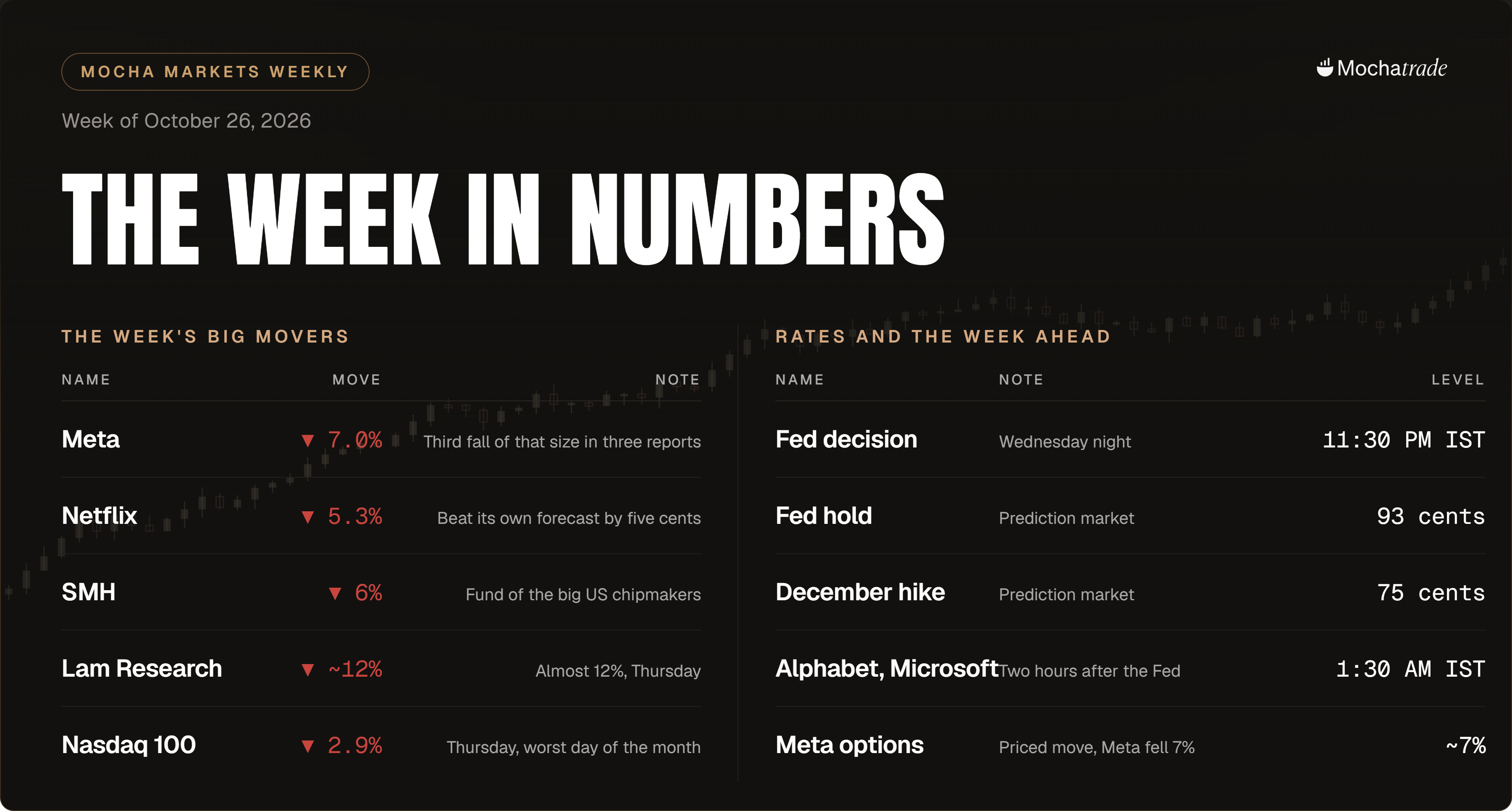
Meta raised the bottom of its spending range for the third quarter in a row, its cash ran out before its budget did, and the stock fell 7.0%
Meta reported on Wednesday night and beat on revenue, but the part that mattered was its spending plan. Meta does not give one number for what it will spend on data centres this year, it gives a range, a lowest and a highest. Three reports in a row now, the highest has stayed put and the lowest has gone up, so the least Meta might spend keeps rising toward the most. The line we told you to watch was free cash flow (what the business brings in minus what it spends on building), and it went negative, since Meta spent more on data centres this quarter than its business made. That gap gets paid from savings, borrowing or new shares, and the stock fell 7% on Thursday, its third fall of that size in three reports.
Hedge funds went net long Nasdaq futures for the first time in 11 months on Tuesday, two days before the Nasdaq 100 fell 2.9%
Every Friday the CFTC (the regulator for every futures contract traded in America) publishes what the biggest speculators held on Tuesday, the same thing as the participant-wise open interest you check on NSE, just weekly. This week's file showed hedge funds net long Nasdaq futures for the first time in eleven months, and they had bought while the index was falling. Then on Thursday the Nasdaq 100 fell 2.9%, and nobody has a primary source for why. So the biggest speculators walked into the worst day of the month long, and whether they cut or held shows up in the next file, at 1:00 AM IST on Saturday, after the Fed.
Netflix beat its own forecast by five cents and fell 5.3%, and its new price was found at 2:30 AM IST
Netflix's letter landed at 1:31 AM IST on Wednesday. It beat its own forecast by five cents, then trimmed its full-year number a little because ad revenue is coming in slower, and the stock fell 5.3%, which answers last week's test: the range got trimmed, so the slowdown has not stopped. The more interesting part is where the new price got made. The Netflix perp on Hyperliquid (a venue outside the US that lists perpetual futures on US stocks) fell 6% in the hour after the letter, sat there through the whole Indian day, and when the US session closed the next night the stock was within a percent of it. The price was found while India slept, and it held while India worked.
02 The US week ahead
Wednesday, October 28, 11:30 PM IST. The Fed decides, with odds favoring a hold.
Context. The Fed (America's RBI) sets rates through a committee of twelve voters and publishes the decision as a statement. Most central banks also tell you what they plan to do next (forward guidance). This one has stopped, so the vote count is the only clue it gives.
What's happening. Prediction markets (where a contract pays a dollar if something happens, so its price is the probability) put a hold on Wednesday at 93 cents. The hike everyone expects sits in December, at about 75 cents. If you are not familiar with hold, cuts, and hike, watch this lecture on the Fed.
What to look out for. The vote line in the statement. In July three voters wanted a hike and lost. If anyone votes for a hike again on Wednesday, December's 75 cents starts to look cheap, meaning the chances of a December hike go up fast. One minute on how to read the statement before it lands.
Why this matters. A hold is priced, so a plain hold moves little. But the Fed's rate is the floor under every other interest rate in America, so a vote for a hike lifts the December odds, then the yield on government bonds, and higher yields press hardest on tech, whose profits sit years away and get discounted harder for every year. All of that lands two hours before Alphabet and Microsoft report. The risk only runs one way.
Wednesday, October 28, 1:30 AM IST Thursday. Alphabet (Google), Microsoft report, two hours after the Fed.
Context. Alphabet and Microsoft along with Meta and Amazon are the companies spending the most on AI data centres. Last quarter Alphabet, like Meta this week, spent more on building than its business brought in, and it sold new shares to cover the gap.
What's happening. Both report after the US close on Wednesday, two hours after the Fed statement. Alphabet's call is at 2:00 AM IST and Microsoft's at 3:00 AM, which is where Microsoft gives its forecast. Both trade as perpetual futures after hours, so the price gets made through the Indian night and day, the way Netflix's did.
What to look out for. Not EPS against consensus. Two lines in each cash flow statement: what they spent on building (capex) and what was left (free cash flow). And whether either gives a spending number for next year, since Meta would not.
Why this matters. Their spending is the order book of the chip, memory and power companies, and last week Meta raised its budget and those suppliers fell anyway, because once a buyer spends more than it earns, its budget is only as good as its borrowing. The Fed sets the rate mood at 11:30 PM, these two set the AI mood at 1:30 AM, and Alphabet walks in already down 6% on the week.
03 One concept
Before Meta reported, its options were pricing a move of about 7%. Meta fell 7%. The market called the size of the night a week in advance, and it still cost some people a fortune.
Here is where that number comes from. Take a call (a bet the stock rises) and a put (a bet it falls) at the same strike (the agreed price), add what they cost, divide by the stock price, and that is the move the market expects in either direction. Buying both is called a straddle, a bet on size alone. If the stock moves more than the premium, the seller pays the buyer the difference. If it moves less, the seller keeps it. On Meta the two ended up about flat.
What the straddle never priced was the path. It only cares where the stock closes the next day, so everything in between is invisible to it. Meta's perp on Hyperliquid, which kept trading while the stock was shut, rose 7% in the hour after the release, held most of that into the Indian morning, then sagged through the afternoon and closed the next US session 7% down. Top to close, a 13% swing inside a day.
So the same result paid two people very differently. The straddle holder got paid for a 7% move and went to bed. A trader holding a perp through the night lived through plus 7 and then minus 13 from the top, and on a leveraged position the margin call lives in the path, not the destination. Options price the size. They have never priced the order.
The earnings lecture covers what gets published on results night and in what order. This is the part that comes after.
04 One chart
META cash in against cash out, last three reported quarters. SMH, October 16 to 23.
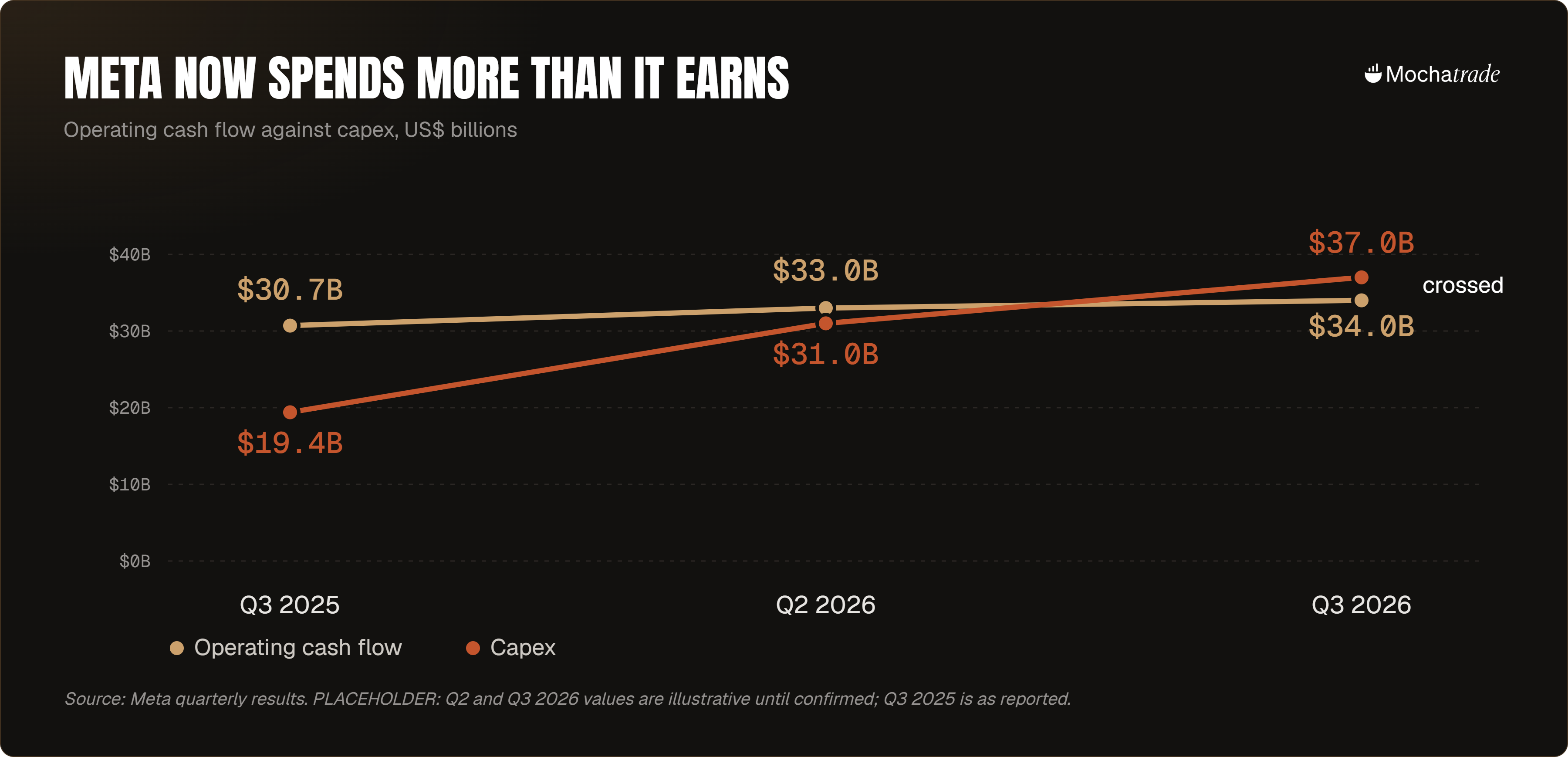
Chart 1: Meta operating cash flow against capex, Q3 2025, Q2 2026, Q3 2026
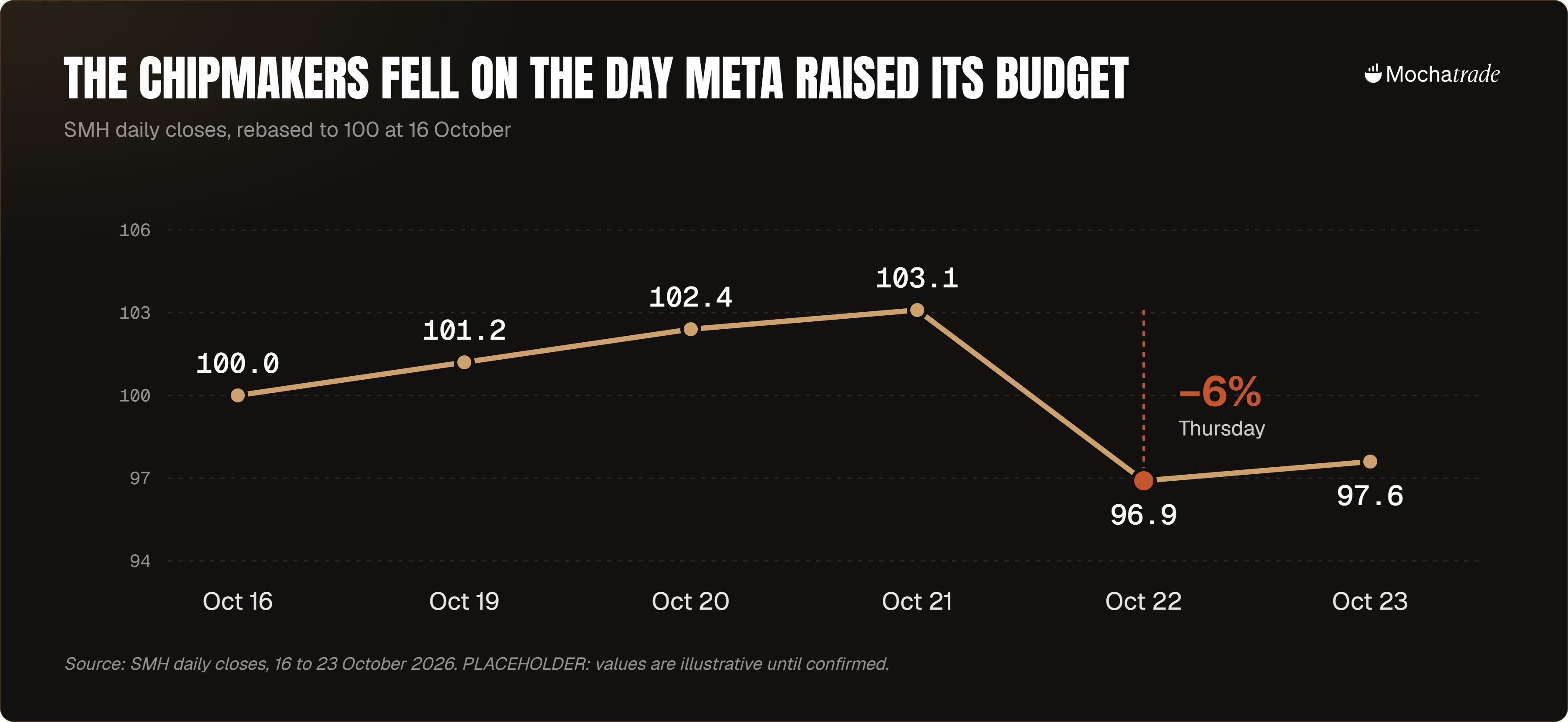
Chart 2: SMH daily closes, Oct 16 to 23
Two charts again, one idea.
A year ago Meta's business brought in far more cash than it spent on data centres. Last quarter the two lines nearly touched. This quarter they crossed, and a budget of about ₹13.3 lakh crore for the year, a fifth of everything the RBI holds in reserves, is now bigger than the business paying for it.
The next morning Meta raised that budget, and the companies it spends it on fell. SMH (a fund of the big US chipmakers) lost 6% on Thursday and Lam Research, which makes the machines that make the chips, almost 12%. Their biggest customer had just promised them more money.
That only makes sense if the budget stopped being an order book. Once a buyer spends more than it earns, every extra dollar it promises has to be borrowed first, so its suppliers start trading like its credit. The order grew and the price fell on the same day.
Meta's numbers landed at about 1:30 AM IST, and its perp kept repricing through the Indian day, with the biggest drop around 1:30 PM. Trade those hours, in rupees, at Mochatrade. Join the waitlist.
Educational content only. Not investment advice.
MochaLearn is a free A to Z course on understanding and trading US stocks and commodities, built for Indian traders.
Terms in this story
- NASDAQNasdaq is the American exchange that began in 1971 as one screen showing every dealer quote side by side, the first…
- RevenueRevenue is the total money a company takes in from sales before any costs, the top line. Growth companies are judged…
- Free cash flowFree cash flow is the cash a business brings in from operations minus what it spends on equipment and buildings.…
- Nasdaq 100The Nasdaq 100 is an index of the hundred largest non-financial companies listed on Nasdaq, weighted by market value…
- CFTCThe CFTC is the Commodity Futures Trading Commission, the US referee for futures, swaps and anything shaped like a…
- Futures contractA futures contract is an exchange-traded agreement to buy or sell at a set price on a set date, settled daily against…
- Open interestOpen interest is the total size of all open positions in a contract, how much money is in the trade. Rising open…
- Perpetual futuresPerpetual futures are contracts that track an asset's price with no expiry date. Expiry is what pulls a normal future…
- EPSEPS is earnings per share: net profit divided by shares outstanding. On results day it is compared with the published…
- Order bookAn order book is the list of every resting buy and sell order, bids on one side and asks on the other, sorted by…
- Margin callA margin call is a broker's demand for more funds when your account falls below the required margin; ignore it and…